No. 15
The t still sits a hair high
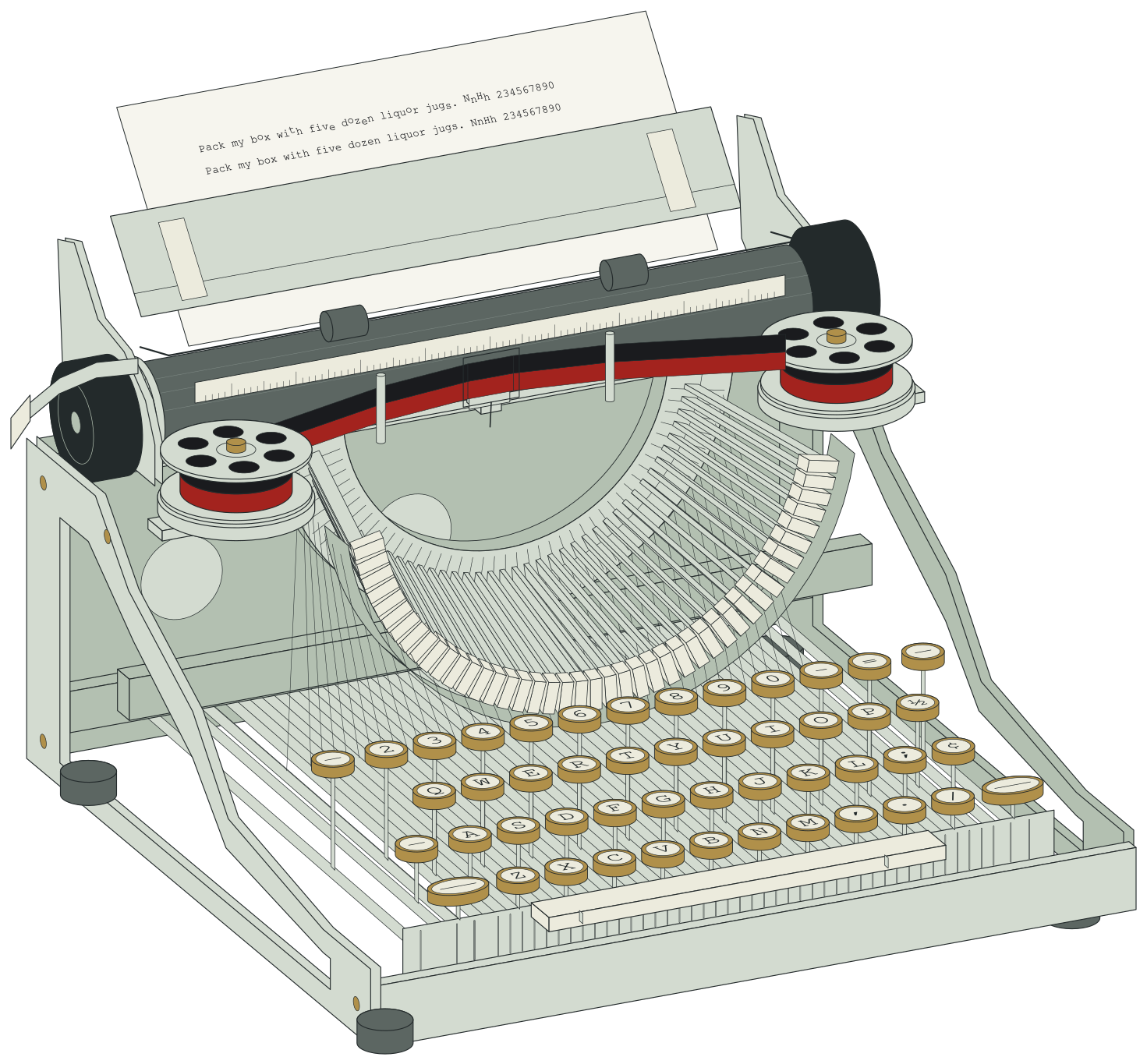
A thirty-pound Underwood out of a neighbor’s garage, with nothing faint and nothing skipped: every common letter is just standing in the wrong place. Eleven evenings of bending typebars back, less one.
 after

No. 15
A thirty-pound Underwood out of a neighbor’s garage, with nothing faint and nothing skipped: every common letter is just standing in the wrong place. Eleven evenings of bending typebars back, less one.
I’m Walt. I fix old manual typewriters in the evenings, in the guest room of a house in Florida, for nobody but me. This is where I write down what was wrong with each one, what I did about it, and what I couldn’t do.
Every machine gets the same line typed on it before I start and again when I stop. Those two strips are the heart of each entry: the way the letters jump tells you most of what’s wrong before a single screw comes out.
I don’t sell typewriters and I don’t take in repairs. More about the bench.
No. 14
No. 13
Bench note
No. 12


