Bench note
Cleaning type, and what stays in the garage


A fellow at the hardware store asked me what I clean typewriter type with. I said “a toothbrush,” and he looked let down. So here’s the long answer, for the next time I’m asked and for the next time I’m tempted by something in a spray can.
The top strip is No. 6, the Remington I keep on the desk for labels and envelopes. That’s what about fourteen months of use with no cleaning looks like, and I’m not proud of it. Look at the e, the a, the o, the g: the bowls are filled in solid, or nearly. That’s all dirty type is. Ribbon ink and ribbon lint pack into the hollow of the letter a little with every strike, like mud in a boot tread, until the hollow prints too. The letters with closed bowls go first. The i and the l will look fine for years and tell you nothing.
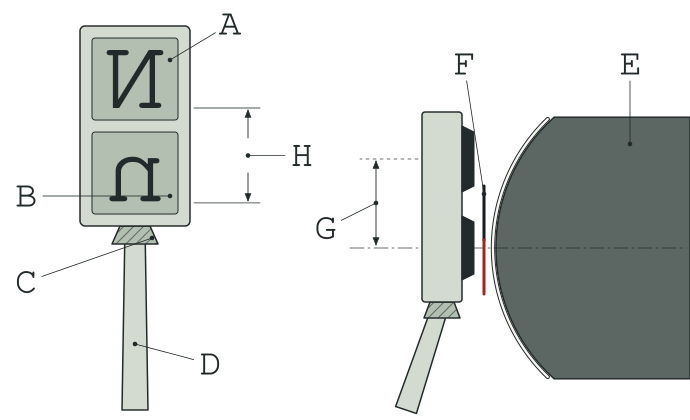
- A
- capital
- B
- lowercase
- C
- solder
- D
- typebar
- E
- platen
- F
- ribbon
- G
- shift travel
- H
- distance between the two baselines
Left, the face as it lies in the basket, which is why the letters read backward. When the shift is set right, G equals H.
What I use
A stiff toothbrush, dry, first. I brush from the back of the slug toward the front, toward me, so what comes loose leaves the machine instead of dropping into the segment. A dry brushing every few weeks is most of the job. If I did it on schedule I wouldn’t need the rest of this list.
Mineral spirits on the brush, not on the machine. When dry brushing doesn’t do it, I dip the brush, knock it nearly dry on a rag, and scrub. Before that I lay a folded shop rag across the basket under the type. Otherwise the inky drip heads straight for the segment, and inky solvent in the segment is how one evening turns into four. See No. 9.
A round wooden toothpick for bowls that are packed hard. Wood, because it gives before the type does. It takes about a minute a letter, and it’s the most satisfying minute in the hobby: the plug comes out whole, the shape of the inside of an o.
Poster putty. The blue kind for hanging things on walls. Press it onto the face, peel, fold it over, press again. It lifts loose crud out of the fine parts, and it’s what I use for a touch-up when I don’t want to get the spirits out.
Daylight. I check my work by tilting the basket toward the window and looking across the faces at a low angle. A clean face is bright all over. A dirty one has dull patches in the hollows.
What I don’t
A wire brush. I own steel ones and brass ones for other jobs. They stay in the garage. The edges of a letter are the part that prints, and they’re small.
A pin or a pick. I used a dental pick on No. 3 and put a bright scratch across the bowl of the lowercase b. It prints fine. I know it’s there.
Rubbing alcohol near anything painted or printed. On No. 4 I wiped a drip off the paper table with alcohol and took the corner of a decal with it. Alcohol cleans type well. It also cleans off some finishes, and you find out which ones the hard way. Mineral spirits has been gentler on everything I’ve tried it on, and I still test on the underside first.
The spray can everybody has. You know the one, blue and yellow. It’s a fine product and I use it on hinges. In a typewriter it frees everything up for a month and then turns to glue. I’ve now cleaned it out of three machines other people sprayed it into.
Anything on the rubber. Solvent on a platen or a feed roller swells it or glazes it. When I’m scrubbing type I roll a sheet of scrap paper in first to cover the platen, and take it out after.
Compressed air before the brush. After, to chase out what the brush loosened, sure. Before, it only drives the lint deeper into the place I’m about to wish it weren’t.
How long
No. 6 took forty minutes, most of it toothpick. I’ve put a note on the calendar for the first of every month, which is the kind of thing I said I’d stop doing when I retired.